The old BBQ Porch was known for collecting practical answers from people who cooked outdoors long before short videos and shiny pellet grills made barbecue look easy. This FAQ is a reconstruction of that knowledge — organized by question, by principle, and by hard experience.
What does barbecue mean?
In the traditional American sense, barbecue means cooking meat slowly with indirect heat and smoke. It is different from grilling. Grilling usually means cooking directly over a hot fire for a short time: steaks, burgers, chops, vegetables, and quick chicken pieces. Barbecue means lower heat, longer cooking, tougher cuts, wood smoke, rendered fat, collagen breaking down, and a finished texture that cannot be rushed.
There are many regional definitions. In some places, barbecue means pork shoulder. In others, it means whole hog, brisket, ribs, mutton, chicken, sausage, or chopped beef. The best way to understand barbecue is to think in terms of method first: indirect heat, smoke, time, and careful management of moisture and tenderness.
What temperature is "low and slow"?
Most traditional barbecue happens somewhere between 225°F and 275°F. The important thing is consistency. A smoker that holds 250°F steadily for hours is easier to cook on than one that swings wildly between 180°F and 350°F. As a starting point:
- Pork shoulder: 225°F to 275°F until tender.
- Pork ribs: 225°F to 275°F until the meat pulls back slightly and bends cleanly.
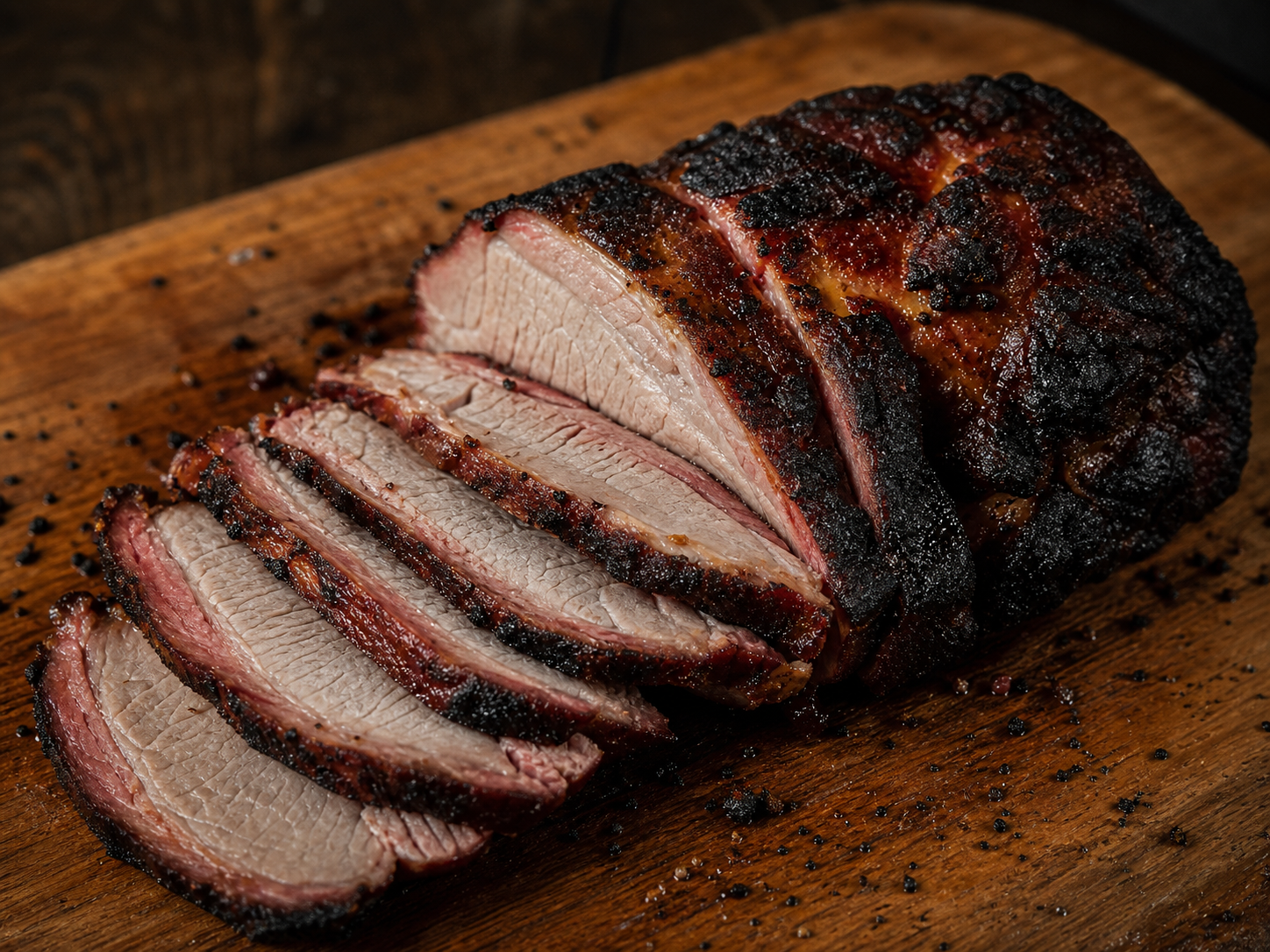
- Beef brisket: 225°F to 275°F until the flat probes tender.
- Chicken: often better around 300°F to 350°F to improve skin texture.
- Turkey: usually better around 275°F to 325°F, with careful attention to food safety.
Do not cook by temperature alone. Internal temperature tells you where you are, but tenderness tells you when the meat is done.
What is the best beginner cut?
Pork shoulder, also called pork butt or Boston butt, is one of the most forgiving cuts. It has enough fat and connective tissue to survive a long cook, and it becomes tender when the collagen melts. If you are learning fire control, seasoning, smoke, wrapping, resting, and pulling meat, pork shoulder is a good place to start.
Ribs are also popular for beginners, but they punish overcooking and undercooking more visibly. Brisket is wonderful but less forgiving because the flat is lean and can dry out before the point is fully rendered. Chicken cooks quickly, but skin texture and food safety require more attention than many beginners expect.
Do I need sauce?
No. Properly cooked barbecue should taste good before sauce. Sauce is a regional accent, not a repair job. That said, sauce can be part of the experience. A vinegar sauce can cut through rich pork. A tomato-based sauce can add sweetness and body to ribs. Mustard sauces work well with pork, especially in South Carolina style barbecue. Peppery thin sauces can brighten chopped beef or pulled pork.
The best approach is to serve sauce on the side until you know what you like. If you glaze meat during the cook, add sweet sauces near the end so the sugar does not burn.
How much smoke is enough?
Good smoke should be noticeable but not harsh. A thin, clean, pale smoke is usually better than heavy white smoke. Thick smoke often means damp wood, poor airflow, or a fire that is smoldering instead of burning cleanly. Harsh smoke can make meat taste bitter, ashy, or medicinal.
Meat takes on smoke most noticeably early in the cook, especially while the surface is still moist. After the bark forms, smoke still matters, but the rate of absorption changes. You do not need to make smoke every minute of a twelve-hour cook. You need a clean fire and enough wood flavor to complement the meat.
Should I wrap meat?
Wrapping is a tool. It is not cheating and it is not mandatory. Wrapping pork shoulder, ribs, or brisket in foil or butcher paper can speed the cook, protect color, and reduce moisture loss. Foil traps more steam and softens bark. Butcher paper breathes more and usually preserves bark better.
If your bark looks good and the meat has taken enough smoke, wrapping can help you push through the stall. If your bark is still pale or soft, keep cooking unwrapped. For many cooks, the decision is visual and tactile rather than strictly timed.
What is the stall?
The stall is the long period during a cook when the internal temperature of large cuts seems to stop rising. This often happens around 150°F to 170°F. The surface moisture evaporates and cools the meat, much like sweat cools skin. The fire is still working, but evaporation slows the temperature rise.
You can wait it out, increase pit temperature, or wrap the meat. Waiting gives you a firmer bark. Wrapping saves time and moisture. Both methods can produce excellent barbecue.
How should barbecue be rested?
Resting is one of the most overlooked parts of barbecue. Large cuts should rest after cooking so juices redistribute and carryover heat settles. A pork shoulder can rest for one to four hours if held safely. Brisket often improves with a long warm rest.
For a short rest, tent with foil on the counter until the meat is easier to handle. For a longer rest, wrap the meat and hold it in an insulated cooler with towels, or in a warm oven held safely above 140°F. Do not slice brisket or ribs too early unless you are ready to serve.
What are the most common beginner mistakes?
The most common mistake is chasing the thermometer. New cooks often open the smoker too often, adjust vents every few minutes, add too much fuel, panic at the stall, or pull meat based on a target number instead of tenderness.
- Too much dirty smoke.
- Sauce applied too early.
- Ribs cooked until they fall apart completely.
- Brisket sliced with the grain.
- Chicken cooked too low for good skin.
- No resting time.
- No notes from one cook to the next.
Barbecue improves quickly when you take notes. Record the cut, weight, pit temperature, fuel, wood, timing, wrapping point, finishing temperature, rest time, and what you would change.
"The fire teaches patience, and the smoke teaches honesty." — from a 1998 list post, author unknown.
A note on this archive
This page is a modern reconstruction inspired by the historic BBQ Porch topic structure. It is not the original mailing list, and it does not claim to reproduce the old archive word for word. The goal is to preserve the useful barbecue knowledge people came looking for: clear answers, practical technique, and respect for the long tradition of outdoor cooking.
← Back to the Archive